Sam Ingersoll
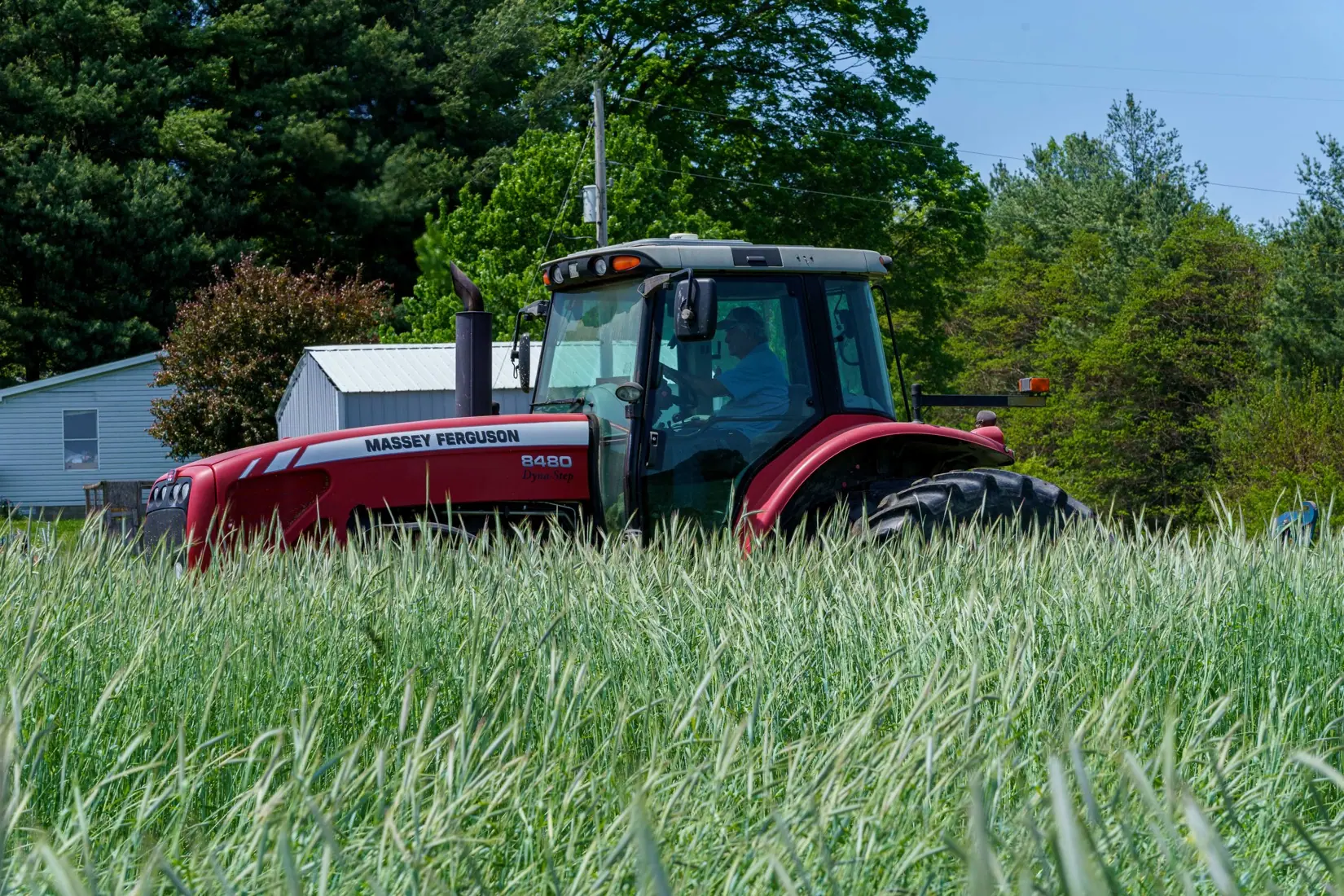
A tractor beside tall green cover crops on a working farm.

Regenerative Farming

Make the land better at growing life.

Photo: USDA Natural Resources Conservation Service

From the road, an orderly field can look like a success. Look closer. Does rain soak in or carry soil away? Do roots reach deep enough to get through a dry spell? Can a farmer make enough to keep doing the work? A system built to maximize one number can miss the things that make a farm productive for the long haul.

Read The Regenerative Pathway: all 12 chapters

Regenerative farming starts with better questions. What has this place lost? Which practices might restore it? How would we know we were making progress? You can ask those questions on a farm visit or before you buy a dozen eggs.

What needs to change - The environmental costs of conventional farming: Soil loss, runoff, habitat and input dependence. - What industrial food does to what we eat: An abundant food supply is not the same as a nourishing one. - What the costs look like off the farm: Farm margins, food access, rural businesses and a health system asked to deal with the consequences.

What can work better - What is regenerative farming?: Practices, principles, and the results that tell them apart. - How to tell whether your farm soil is improving: Follow rain from where it falls to where it goes. - Grow better food: What crops and animals eat or absorb can change what ends up on our plates. - Build a food economy that works locally: Local purchasing, fair treatment, shared logistics and a way to finance transition.

What you can do Buy regenerative food · Find a farm · Learn with other people · Try a small experiment · Look at the whole system.